
Thousand Hells: The Underworld Heists Beginner Guide
Learn how to form a balanced party, approach dynamic encounters, manage risk, and plan your first journey through the underworlds.
FAQ
What is Thousand Hells: The Underworld Heists?
How many heroes are in the party?
How should beginners build a party?
How long does one run take?
Does every run use the same mission and companions?
What kind of game is Thousand Hells?
Thousand Hells is presented as a tactical narrative adventure where a four-hero party accepts a contract and descends into a myth-inspired underworld. Progress depends on crew composition, character skills, and choices during dynamic encounters. Success is not simply winning fights: the goal is to finish the job while protecting the party’s body and mind.
Source: official Thousand Hells: The Underworld Heists Steam page. Images on this page are official Steam store media.
| Core element | What the supplied description says | Beginner takeaway |
|---|---|---|
| Party | Four heroes risk physical and mental harm | Build for broad coverage, not one narrow plan |
| Contract | The mysterious Ambassador provides a changing mission | Read the objective before choosing specialists |
| Encounters | Choices and party skills determine progress | Match the crew’s strengths to each situation |
| Consequences | Decisions can change the party permanently | Protect long-term health when the payoff is unclear |
| Underworlds | Each setting has its own threats and visual identity | Adapt the party and route instead of repeating one solution |
| Replay structure | Failed missions can be retried with a different cast | Use each attempt to learn rather than expecting a fixed walkthrough |
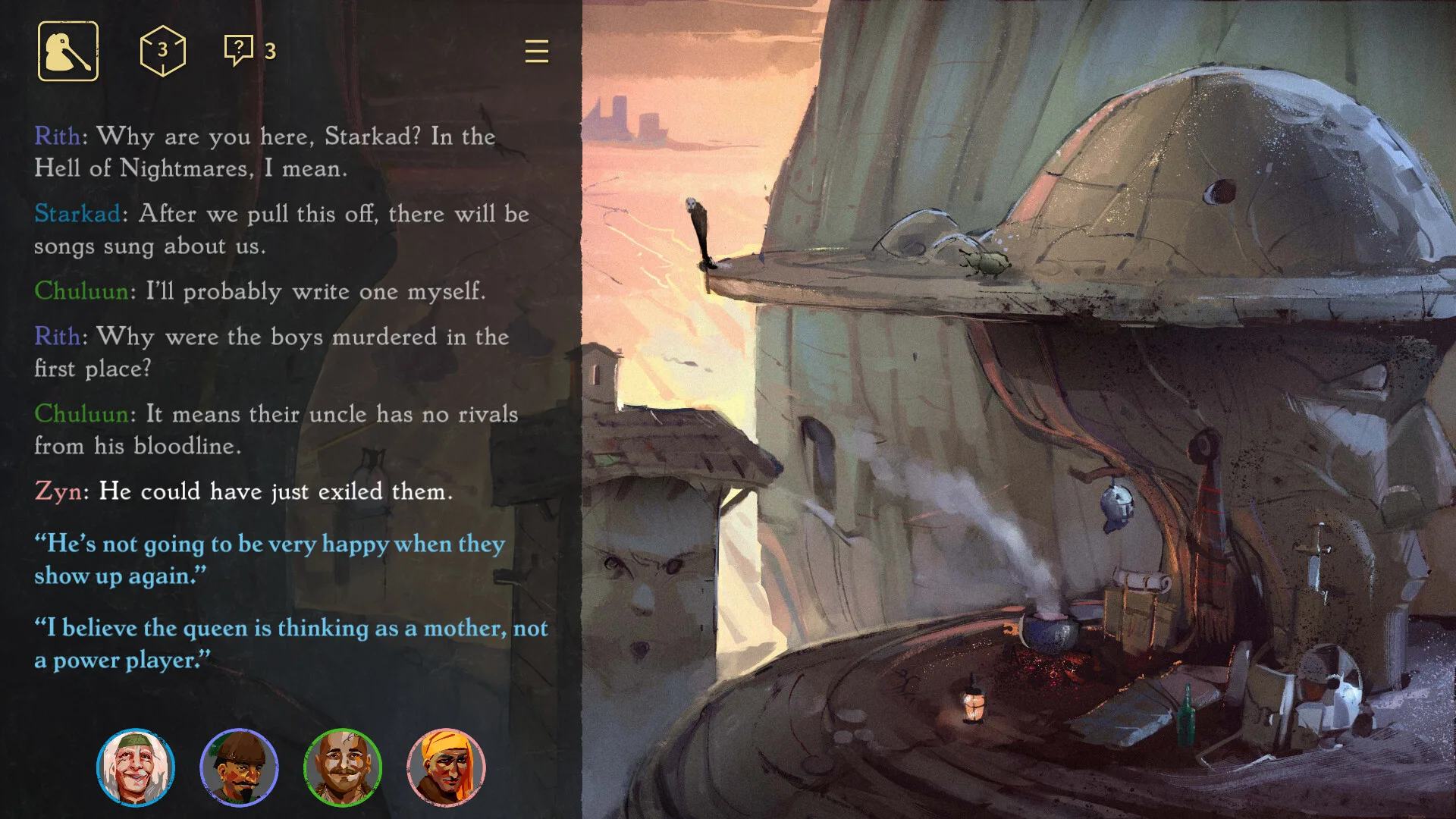
For a concrete pre-release example, start with the gameplay walkthrough. The separate tactical encounter guide explains how situations, heroes, actions, wins, and losses were presented in developer footage.
How should you prepare for your first contract?
Begin by identifying what the contract asks the party to accomplish, then choose a leader and recruits who can solve different kinds of problems. The description warns that plans rarely survive contact with the underworld, so preparation should create options rather than optimize for one predicted scene. Leave room for social, physical, mental, and supernatural challenges.
| Preparation step | Question to ask | Why it matters |
|---|---|---|
| Read the contract | What person, place, or outcome defines success? | The objective tells you which expertise may be essential |
| Review the destination | What threats are associated with this underworld? | Each hell is described as mechanically and narratively distinct |
| Define the player character | Which problems can the leader already handle? | Recruitment should fill gaps rather than duplicate strengths |
| Compare recruits | Which professions, skills, traits, and personalities differ? | Variety creates more usable options during encounters |
| Accept uncertainty | Which risks can the party survive if the plan fails? | Dynamic encounters can produce lasting consequences |
How do you form a balanced party?
Build the party by combining distinct professions, skills, traits, and personalities. The supplied description says heroes do not always get along, so mechanical coverage is only part of the decision. A strong beginner party should offer several ways to approach a problem while avoiding obvious personality conflicts that could make an already risky contract harder.
| Party dimension | What to look for | What to avoid |
|---|---|---|
| Profession | Different domains of expertise | Multiple recruits with the same narrow job |
| Skills | Coverage for physical, social, mental, and supernatural trials | A team that relies on one type of action |
| Traits | Strengths that create useful encounter options | Assuming a trait is universally useful |
| Personality | Recruits whose priorities can coexist | Ignoring stated conflicts or conditions |
| Durability | Ways to preserve body and mind | Taking every high-risk option without recovery planning |
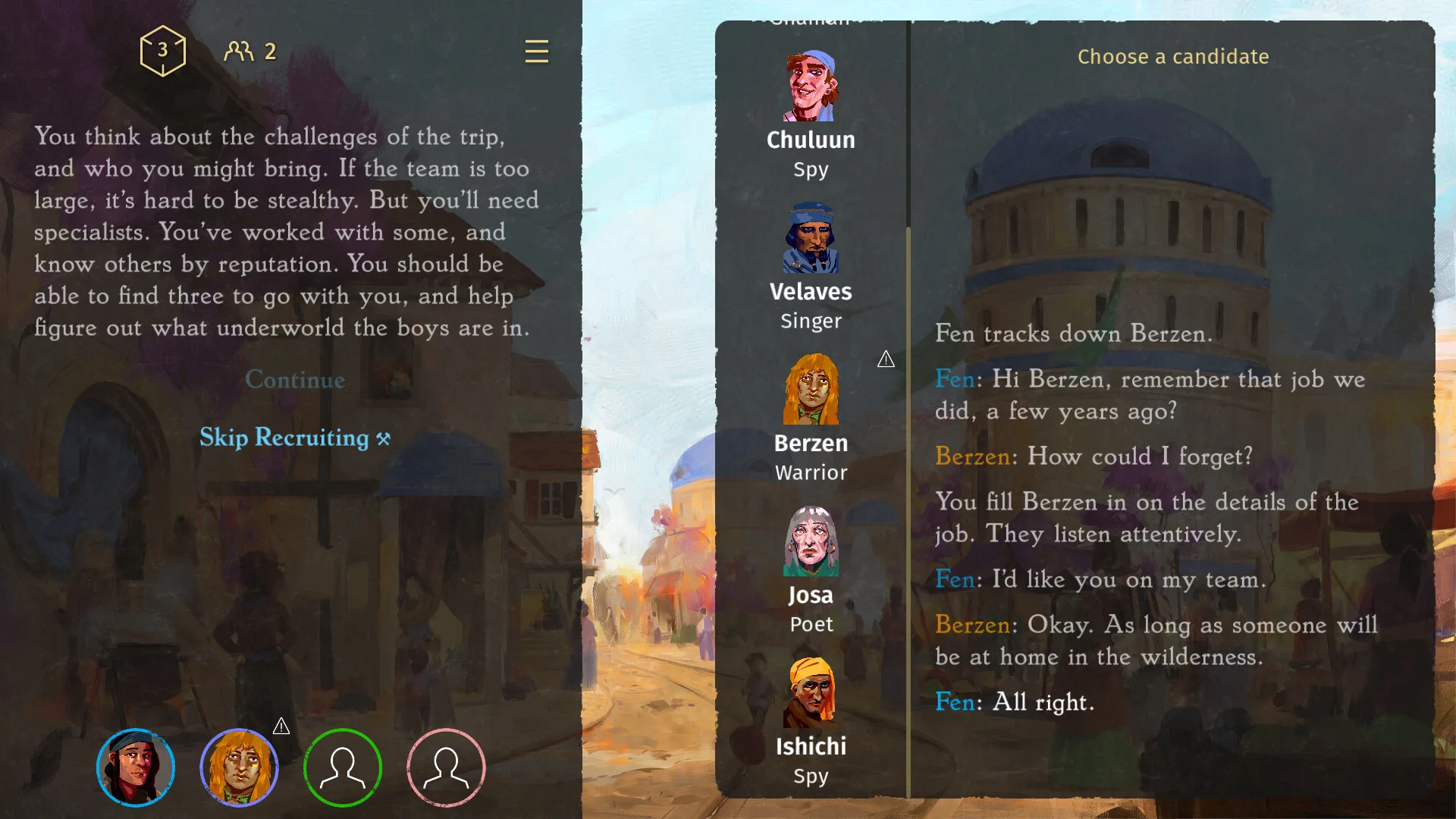
Can there be one best party?
The supplied material does not support a universal best team. Contracts, helpers, encounters, and underworld threats are described as variable, which makes party quality contextual. Use the character index and trait reference to compare verified options once individual entries are available.
How do choices affect the party?
Choices determine both immediate progress and the condition of the crew. Each encounter can offer several routes, including safer approaches and riskier options with larger potential rewards. The description also says skills change through successes and failures, while injuries can include a broken arm or worse. Exact transformation and recovery rules remain not yet confirmed.
| Choice style | Possible benefit | Possible cost |
|---|---|---|
| Use a matching specialist | A strong narrative fit for the obstacle | Exposes that hero to consequences |
| Take the safer path | Preserves party health and stability | May give up a larger payoff or shortcut |
| Accept a risky option | Can produce a more valuable result | May cause injury, stress, or another lasting change |
| Avoid combat | Uses social or specialist skills instead | Requires the right party member and action |
| Continue while weakened | Keeps the mission moving | Compounds later physical or mental pressure |
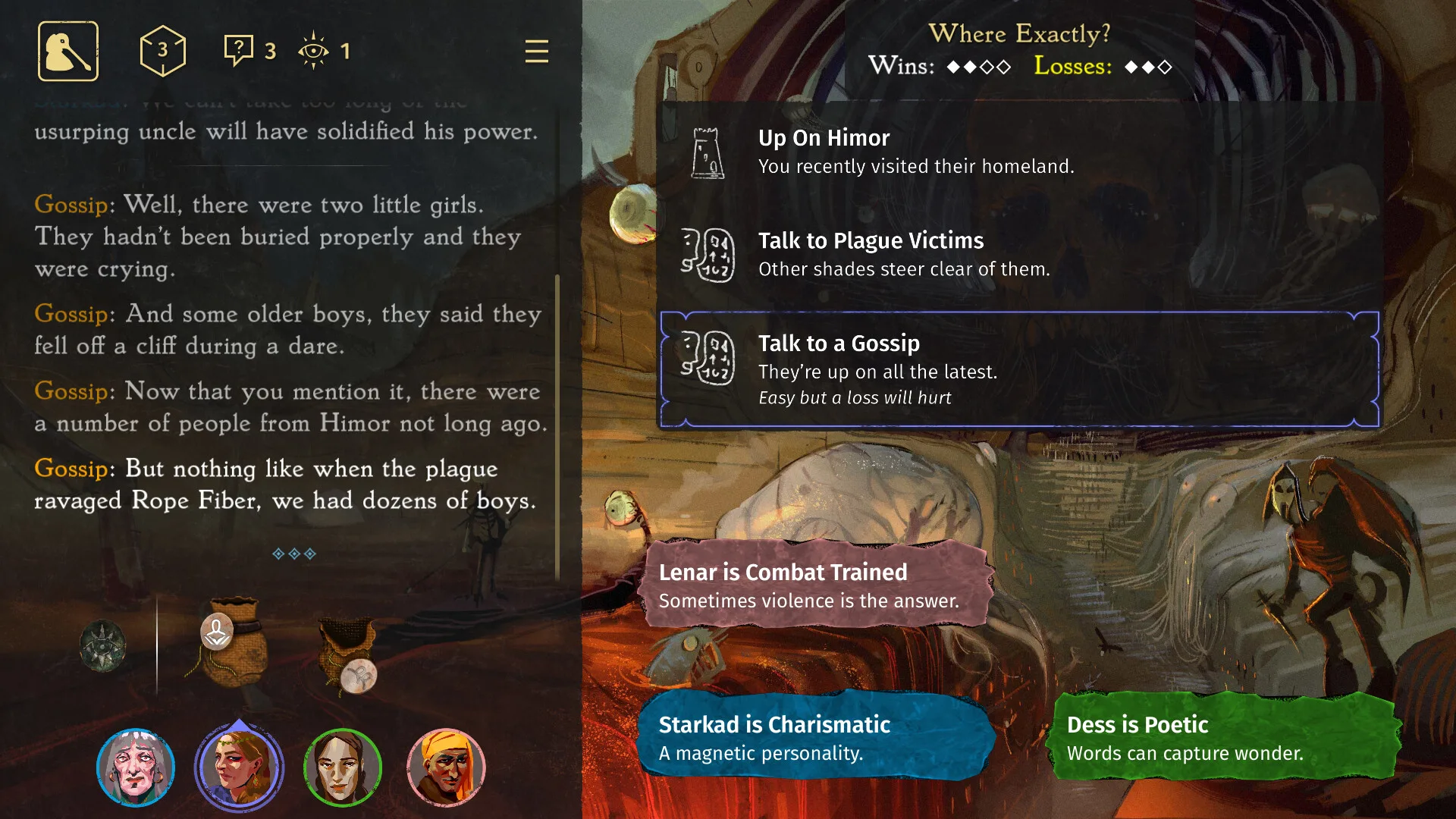
The examples supplied include sending a bard to calm bandits and using a demonologist to communicate with a possessed book. These illustrate the intended range of noncombat solutions; they do not prove that those exact options appear in every mission.
How do dynamic narrative encounters work?
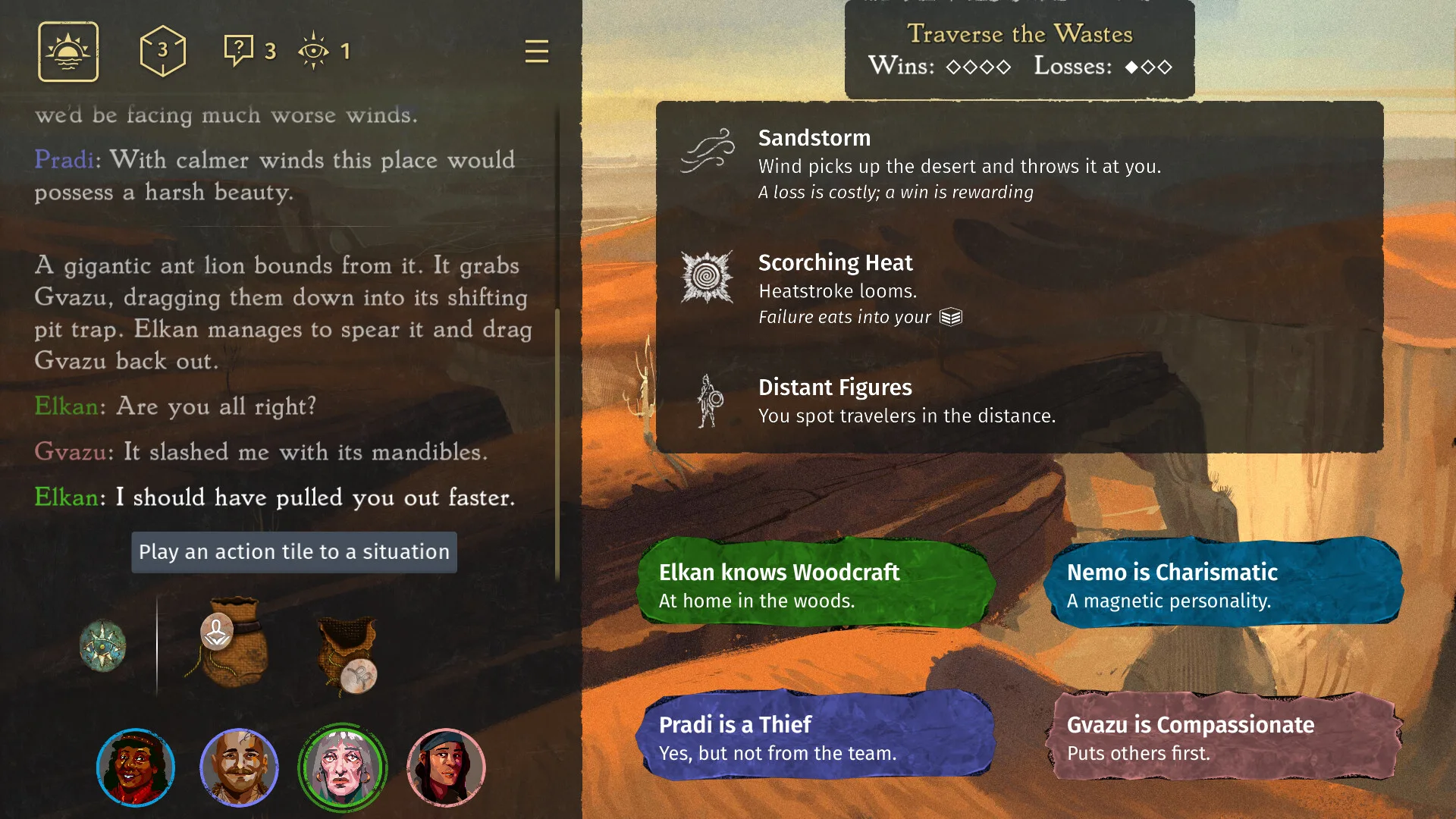
Dynamic narrative encounters present several possible paths and ask you to use the party’s abilities to advance. The supplied description claims more than 280 unique encounters, while developer footage shows players matching character-derived actions to specific situations. The outcome can depend on narrative fit, current consequences, previous decisions, and chance rather than a single combat statistic.
| Encounter claim | Value stated in the supplied material | Verification status |
|---|---|---|
| Unique dynamic encounters | More than 280 | not yet confirmed Confirm against a primary source or current build |
| Paths per encounter | Multiple | not yet confirmed Minimum and variation are not specified |
| Party influence | Skills and traits affect available solutions | Demonstrated in pre-release footage; current build not yet confirmed |
| Long-term change | Successes and failures can alter skills | Exact rules not yet confirmed |
| Harm | Physical and mental consequences are possible | Exact condition system not yet confirmed |
What should you check before selecting an option?
- Identify what the situation is actually asking the crew to overcome.
- Compare the available action with the relevant hero’s profession, skills, and traits.
- Check whether that hero is already carrying an injury or mental consequence.
- Consider whether the reward justifies permanent or difficult-to-reverse harm.
- Look for a safer route if the party lacks a convincing match.
Consult the encounter reference for choice-specific consequences rather than assuming that a general strategy applies everywhere.
When should you take a risk or play safely?
Take a risk when its payoff directly supports the contract and the party can absorb the stated consequence. Choose the safer route when the reward is optional, the relevant hero is already compromised, or later challenges are unknown. Because party changes may persist, a short-term gain can reduce the crew’s ability to finish the mission.
| Decision condition | Safer recommendation | Riskier recommendation |
|---|---|---|
| Contract-critical objective | Preserve the specialist needed later | Spend resources if failure would end the plan |
| Optional reward | Skip when the crew is weakened | Attempt when the matching hero is healthy |
| Unknown route ahead | Keep flexible skills and recovery resources | Commit only if the current payoff improves future coverage |
| Existing injury or stress | Use another hero or alternate path | Proceed only if the cost is understood |
| Poor skill match | Search for another approach | Avoid gambling on an unrelated action |
What makes each underworld different?
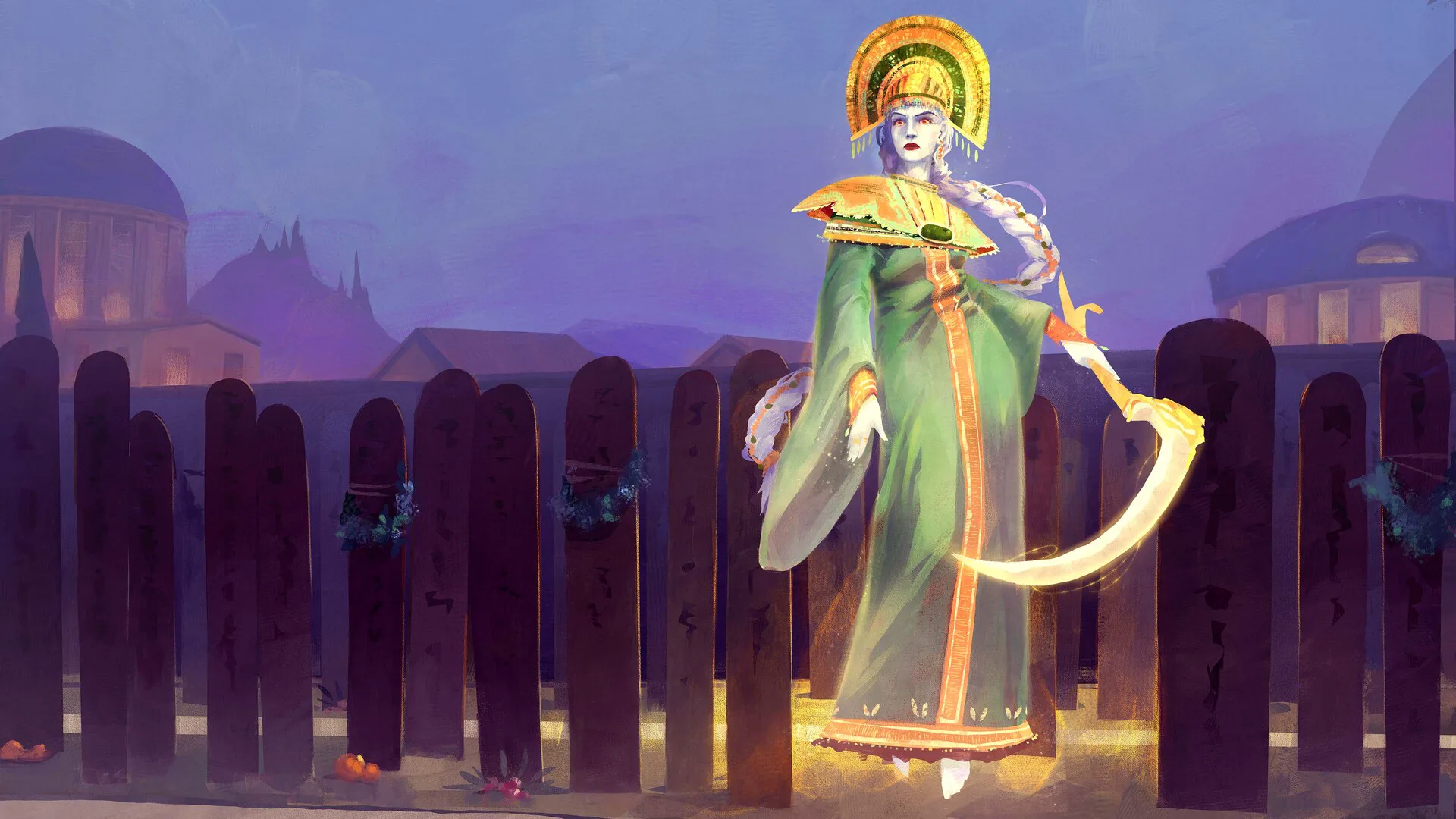
Each underworld is described as a distinct mythic setting with its own palette, survival threats, and influence on the story. The supplied examples range from following an Orpheus-like rescue journey to protecting the Eternal City from an insect plague. The selected destination and the way the crew handles it can redirect later events.
| Setting element | Description supplied | What remains unknown |
|---|---|---|
| Home | The Eternal City, a Byzantine-flavored fantasy setting | Full map, factions, and available services not yet confirmed |
| Employer | A mysterious figure called the Ambassador | Identity, contract rules, and progression not yet confirmed |
| Underworld structure | Multiple distinct hells influenced by mythology | Complete list and unlock requirements not yet confirmed |
| Story example | Rescue a loved one in an Orpheus-inspired journey | Exact mission name and outcomes not yet confirmed |
| Story example | Save the Eternal City from an insect plague | Exact mission structure and outcomes not yet confirmed |
Use the underworld index to compare destinations and the ending guides to track how verified route choices affect each conclusion.
How does replayability change your strategy?
Replayability comes from changing quests, variable helpers, retryable failures, distinct underworlds, and choices that reshape the party. The supplied description estimates one run at about an hour and says automatic saving plus a story synopsis supports shorter sessions. Treat each attempt as a scouting run: record what appeared, then adjust coverage next time.
| Replay feature | Supplied claim | Planning implication |
|---|---|---|
| Quest generation | A new unique quest can be created | Fixed step-by-step routes may not transfer between runs |
| Failed missions | Can be retried | A failed attempt can reveal missing skills or risky choices |
| Helper cast | Changes each time | Party recommendations must account for availability |
| Typical run | About one hour | Session length needs current-build verification |
| Saving | Automatic saving is available | Exact save timing and slots are not yet confirmed |
| Story recap | A synopsis summarizes progress | Useful for returning after a short session; behavior not yet confirmed |
What should you record after a failed mission?
Note the contract, underworld, available helpers, major encounter choices, injuries or mental consequences, and the point where the plan failed. Compare that record with your next cast so you can replace missing coverage instead of repeating the same party structure automatically.
Who created the setting and stories?
The supplied description credits the designers of King of Dragon Pass and the Six Ages series with creating this stand-alone fantasy world. It also describes an anthology built by eight writers, including Robin D. Laws and Aaron A. Reed, and supported by hundreds of hand-painted illustrations. Full credits and exact counts require source verification.
| Creative claim | Detail supplied | Status |
|---|---|---|
| Narrative format | Anthology of mythic journeys | Source URL not yet confirmed |
| Writers | Eight writers | Full credited list not yet confirmed |
| Named writers | Robin D. Laws and Aaron A. Reed | Credit spelling and roles not yet confirmed |
| Visual presentation | Hundreds of hand-painted illustrations | Exact count and artist credits not yet confirmed |
| Prior work | Connected to designers of King of Dragon Pass and Six Ages | Individual developer credits not yet confirmed |
Which details remain unconfirmed?
This pre-release guide still needs hands-on confirmation of party limits, encounter counts, run length, autosave behavior, skill progression, injuries, recovery, and quest generation. Creative-credit totals and illustration counts also remain promotional claims until the full credits are available. The page will be updated after launch wherever the public build differs from the current description.
Related Articles
encounters
Thousand Hells: The Underworld Heists Tactical Encounters
Learn how heroes, action tiles, situations, consequences, chance, and asymmetric win conditions shape tactical narrative encounters.
guides
Thousand Hells: The Underworld Heists Gameplay Guide
Learn how character creation, crew recruitment, narrative encounters, and underworld routes work in this pre-release gameplay walkthrough.
guides
Thousand Hells: The Underworld Heists Release Date Guide
Check the planned September 8, 2026 release date, Steam availability, core gameplay, party planning, and first-run preparation.
Was this helpful?
Thanks for the feedback!